Harvest Note 2026
Four heatwaves and a dry September.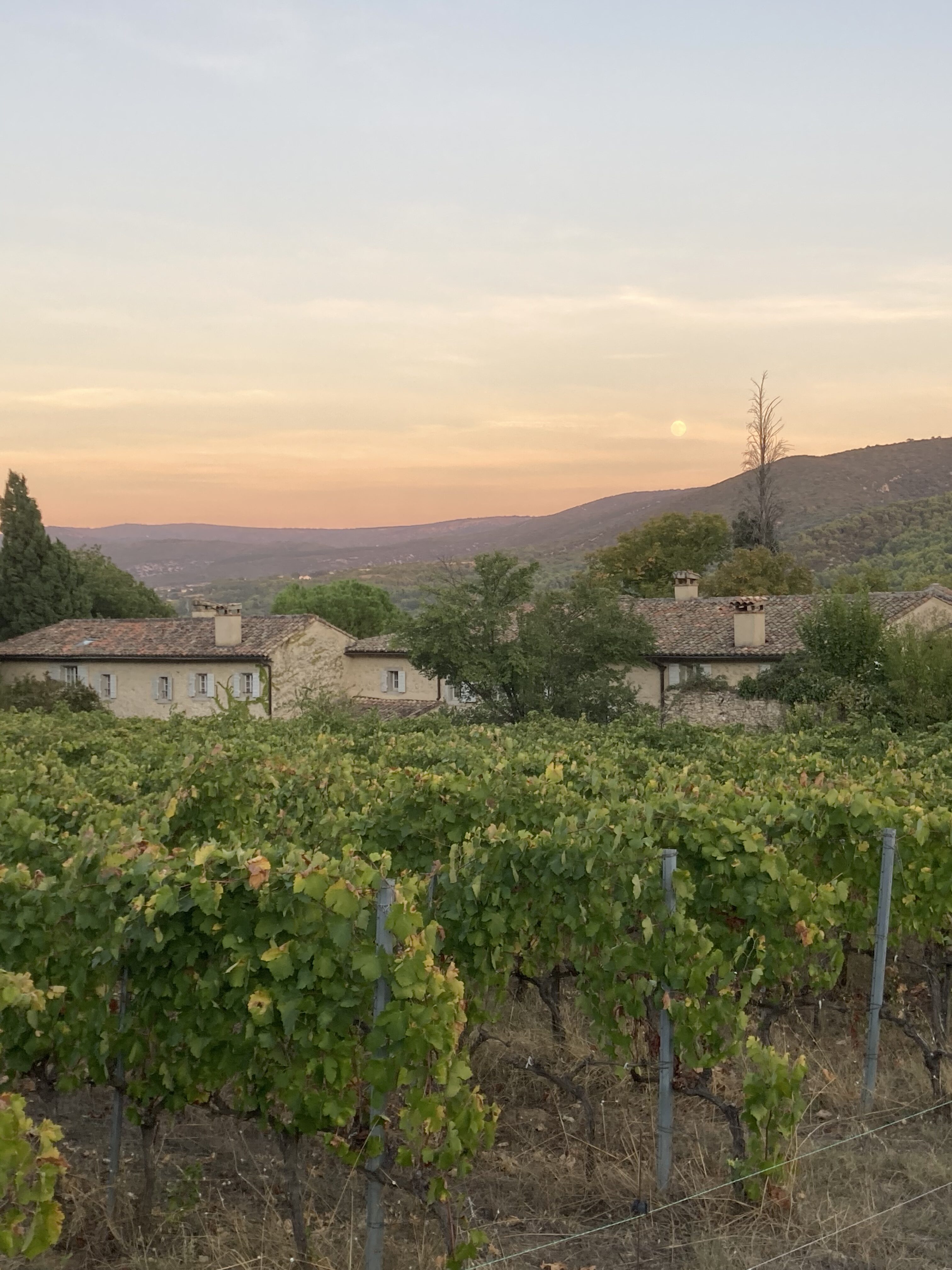
After plentiful winter rain (+400mm) – which always makes us smile – we thought that 2026 could take whatever the weather gods could throw at it. The aquifers were replenished, the springs overflowing, and it looked a promising start to a year where we had decided to plant some new vines (more white grapes in the valley).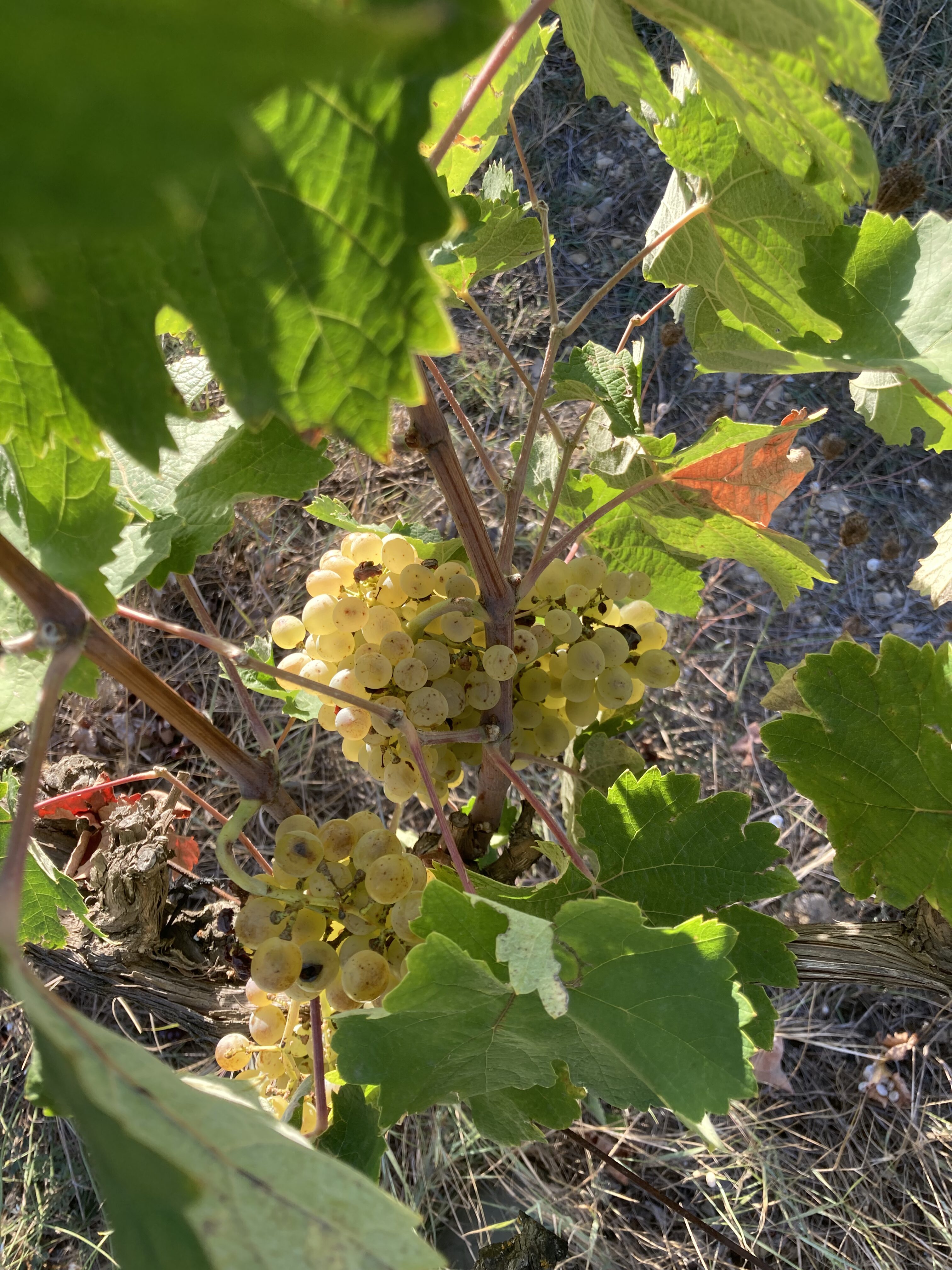
In some parts of France it was really wet, with many rivers flooding, and the flood water sitting. Novelty photos circulated in February of people pruning vines… from canoes.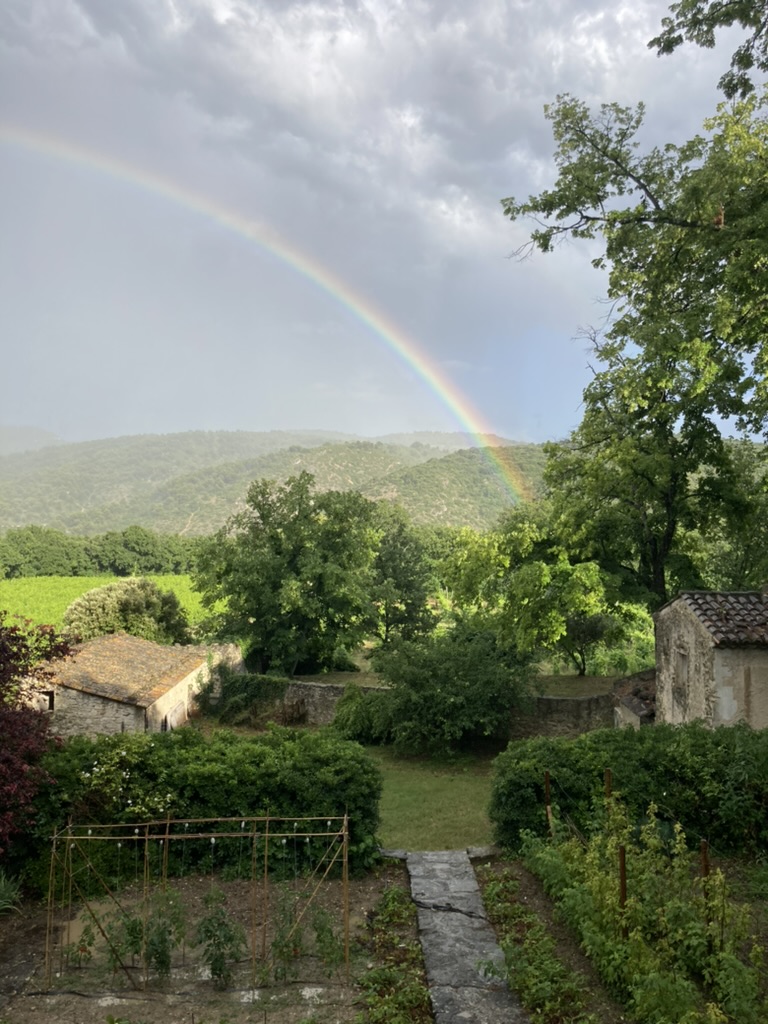
So, when the temperatures hit a crazy 38°C by mid-May we were thinking OK, that is extreme but at least we have a buffer of humidity already banked. These are not temperatures we are used to at that time of year. And then they kept coming, pretty much each month. We didn’t have the crazy 44°C of Bordeaux (still can’t really understand how it was this high so close to the Atlantic), or the Loire (the river reduced to a trickle in places by September), or their terrifying fires, but we were high 30s for extended spells through our growing season.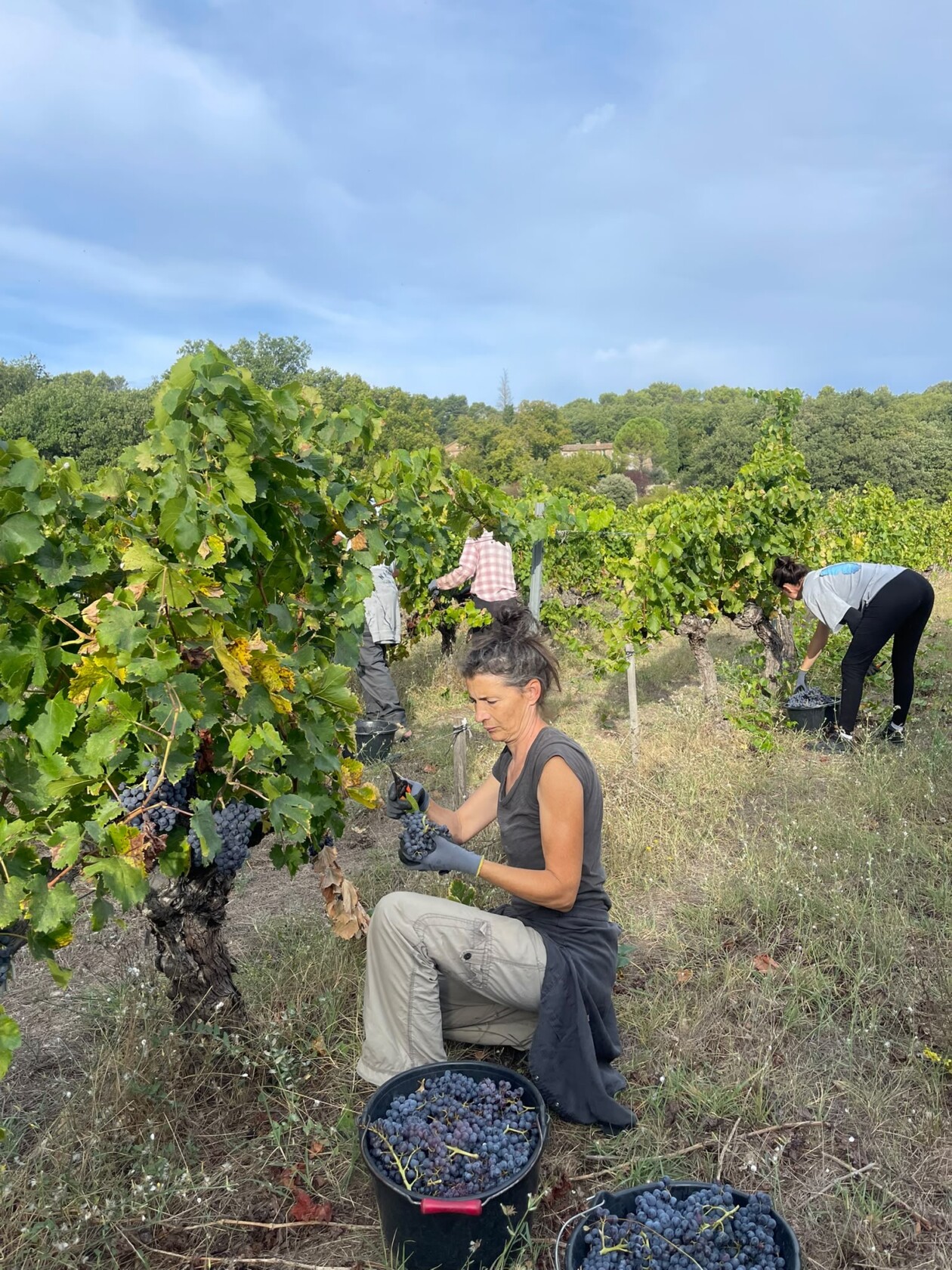
We dry farm in an industry/region that is relying more and more on irrigation. While technically illegal for appellations (AOC), each year in early June there is now an official notification saying something like: ‘due to the extreme heat/dry you are allowed to irrigate’. And people are installing the hardware to do it – if they do that, they will use it. In broadbrush terms our vines coped but with much reduced yields. The old vines have deep root systems, and can tap into whatever is available. The château is located where it is because of the natural springs around it, there is moisture here. We are also in the hills, so cooler, through our own altitude (to 350m), and the influence of the neighbouring Monts de Vaucluse (+700m), let alone Mont Ventoux (1,912m). And all our parcels of vines are surrounded by forest which act as a reservoir of cooler air that drifts into the vines at night.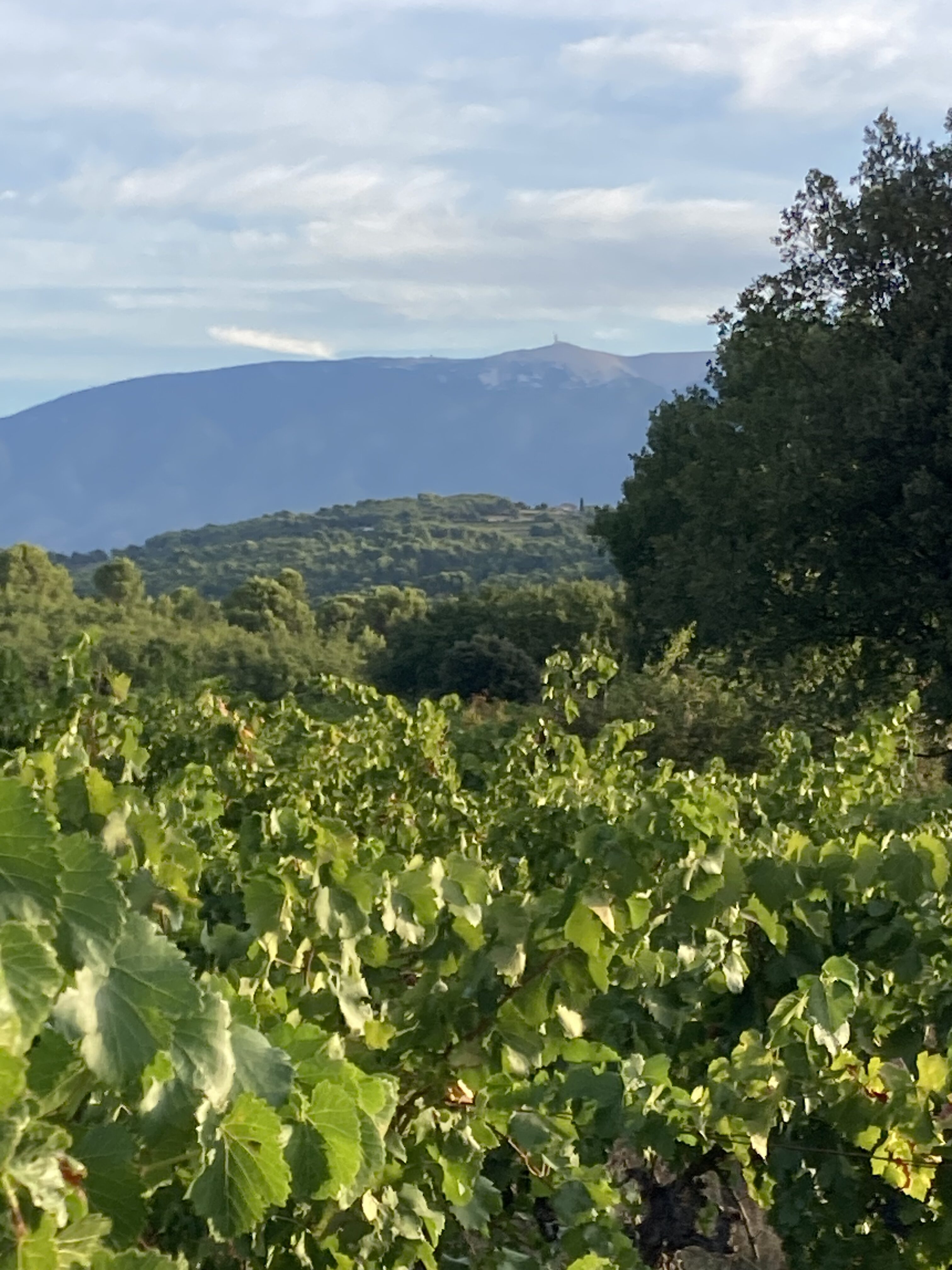
So old vines from grapes varieties from the south managed. We found our Syrah, at home in more northern areas, struggled. It doesn’t seem to control its natural transpiration during very hot spells the way Grenache can. So is more likely to become stressed.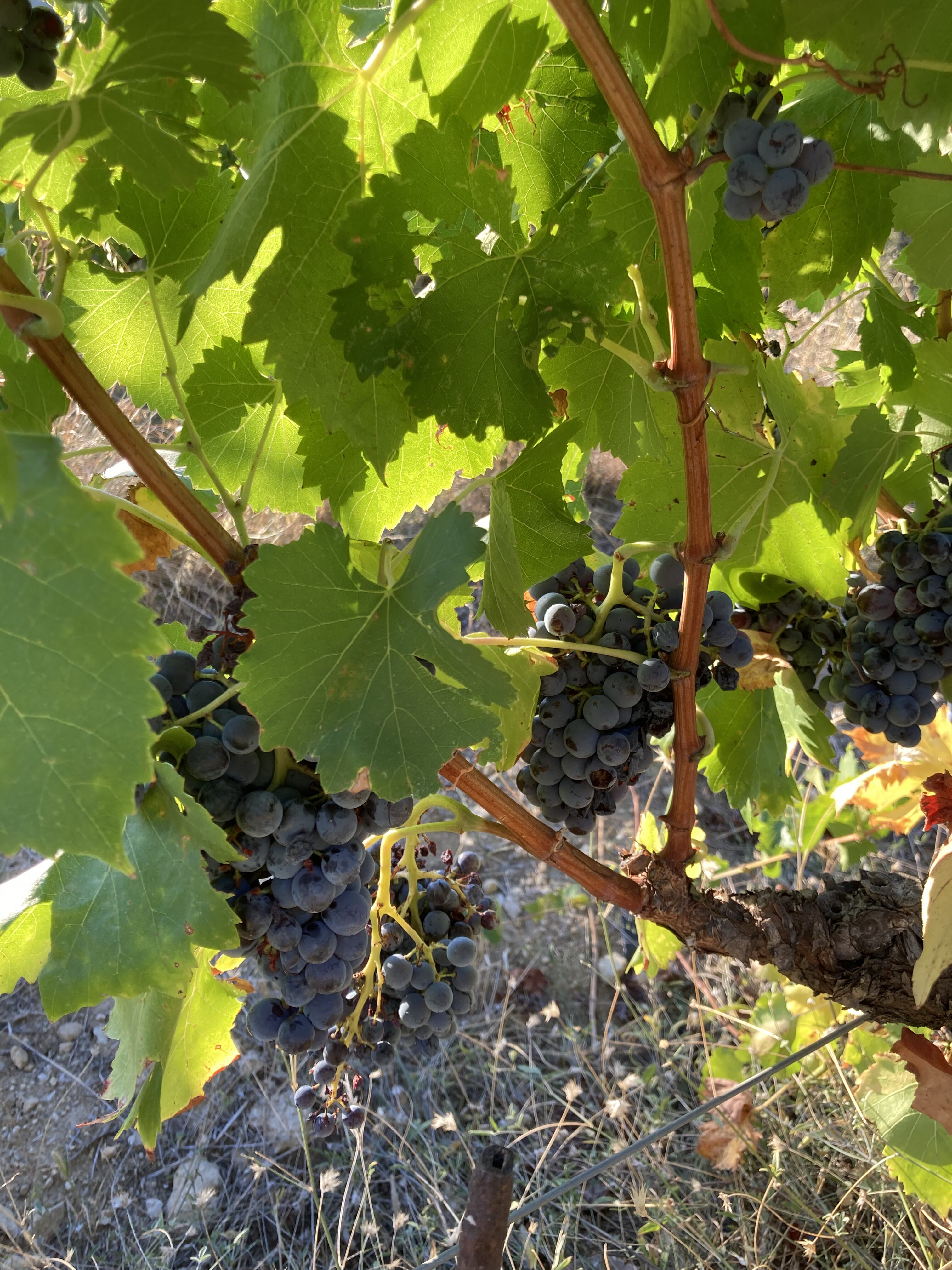
Young vines, that have yet to establish their deep root network also looked sorry for themselves. The extreme of this was our new plantation. It looked as though we had planted a new dwarf variety of vine, about 20cm high. We ended up watering them by-hand 13 times, even into September. Unheard of. When we arrived at Unang in 2001, our vineyard worker/resident expert, Mohamed (who has visited Unang again this year), told us that at Malemort-du-Comtat it is cold and wet enough there was no need to water young vines. How times change.
For anyone wondering what we planted, it was mainly Clairette, with some Rolle (French for Vermentino), Grenache Gris and Clairette Rose. The Grenache Gris managed the heat best. But it looks like we lost about 25% of the plants due to the drought conditions, but we’ll learn the exact number in the spring.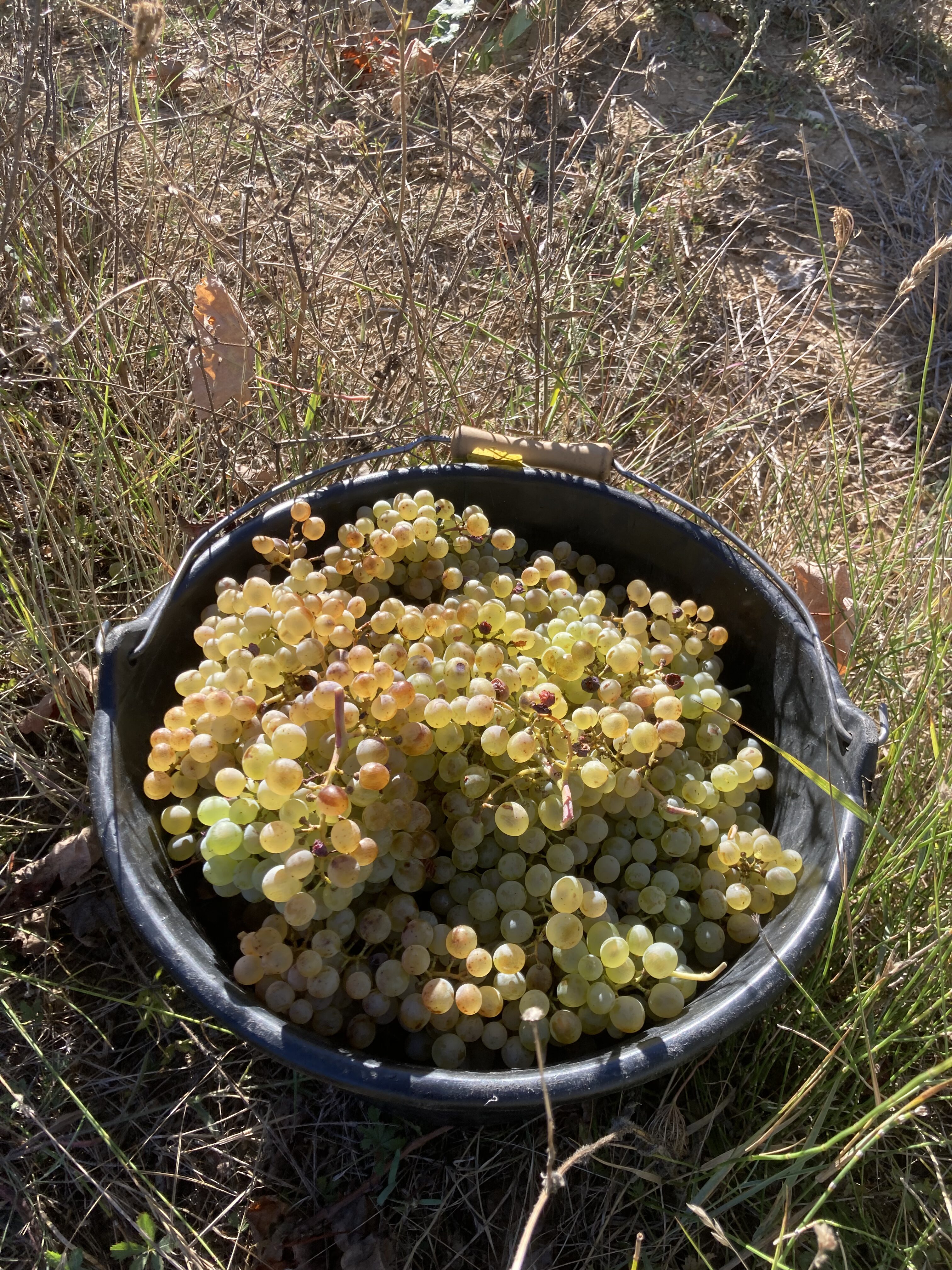
A positive of the season was that flowering took place in benign conditions and the fruit set was good. The dry season meant these grapes didn’t fill out but did see us do far fewer treatments in the vineyard that previous years as the mildew pressure was low. With the heat, when a rare storm came through, it was high energy. There was no real surprise that we were strafed by hail twice At least it was mixed in with rain at Unang, other places had it far worse.
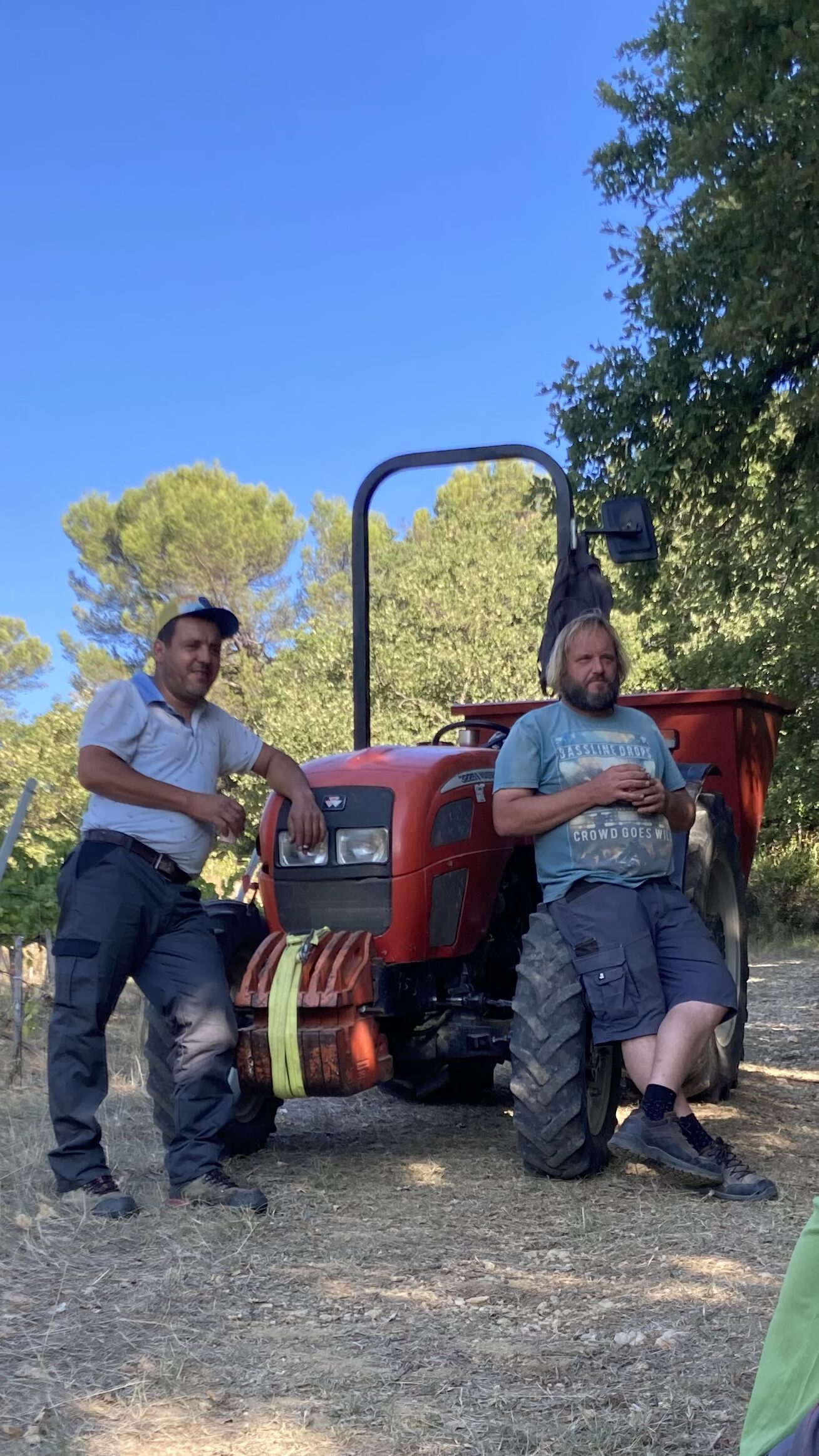
Aymen and Anthony
With the heat and dry, the harvest was early. A parcel of Syrah was picked in last days of August (as in 2003 and 2022), and we finished in the last days of September (as per 2022). This puts us 10-14 days earlier that what we are used to. By contrast, in the cool year of 2013, we didn’t start picking until 2nd October.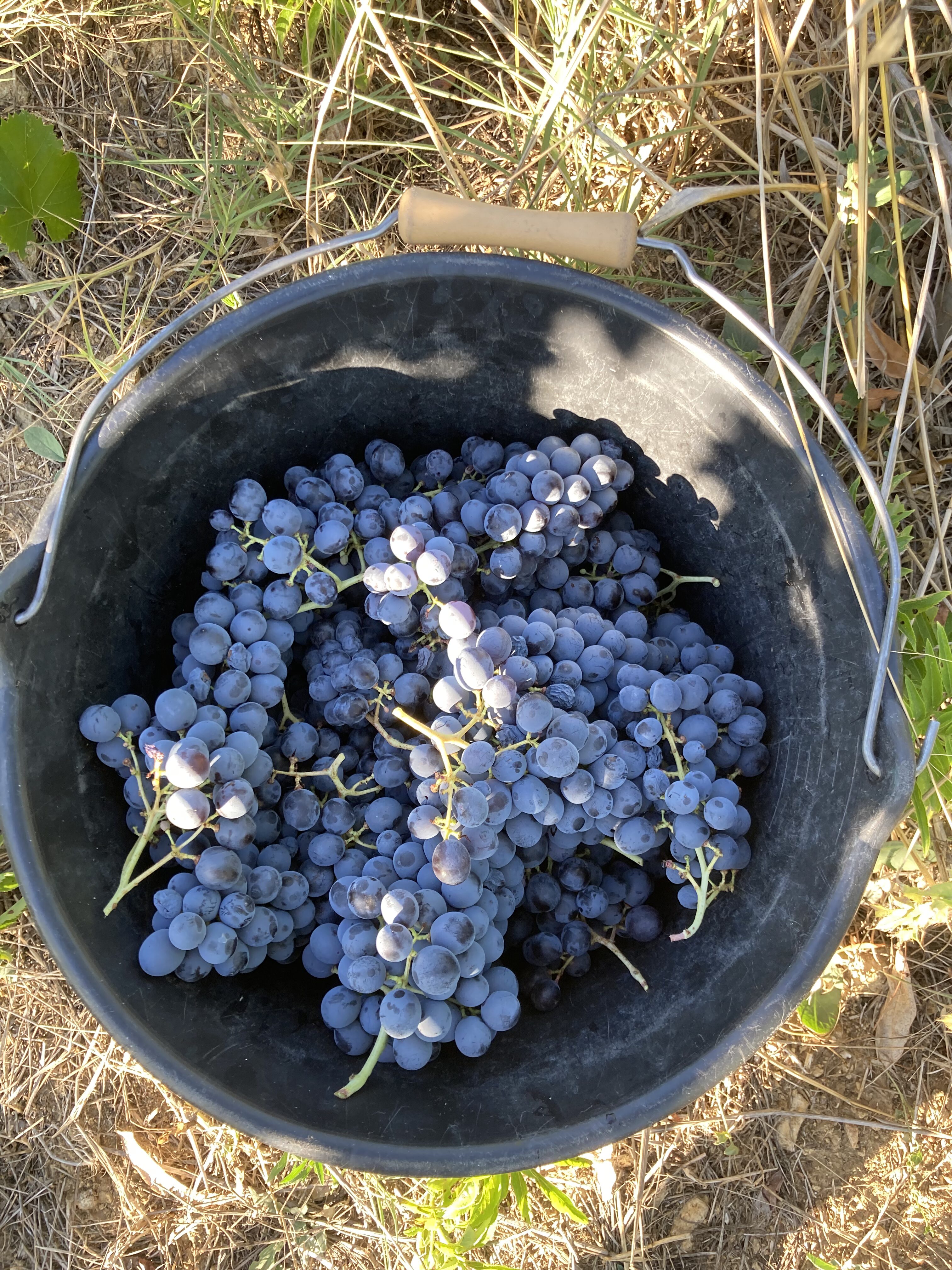
Seven weeks without rain during harvest was a first too. Last year, September 2025, saw 200mm of rain – it always rains in September, often multiple times but commonly with the new moon around the second week of the month. Daytime temperatures remained in the mid-to-low 30°C for the month, and even the nights were only rarely below 14°C, and sometimes stubbornly around 19°C (nighttime lows are usually high single figures when we pick the Grenache). We only picked in the morning as otherwise the grapes would have been too hot, and the fermentations too explosive. Some days we stopped picking by 11am.
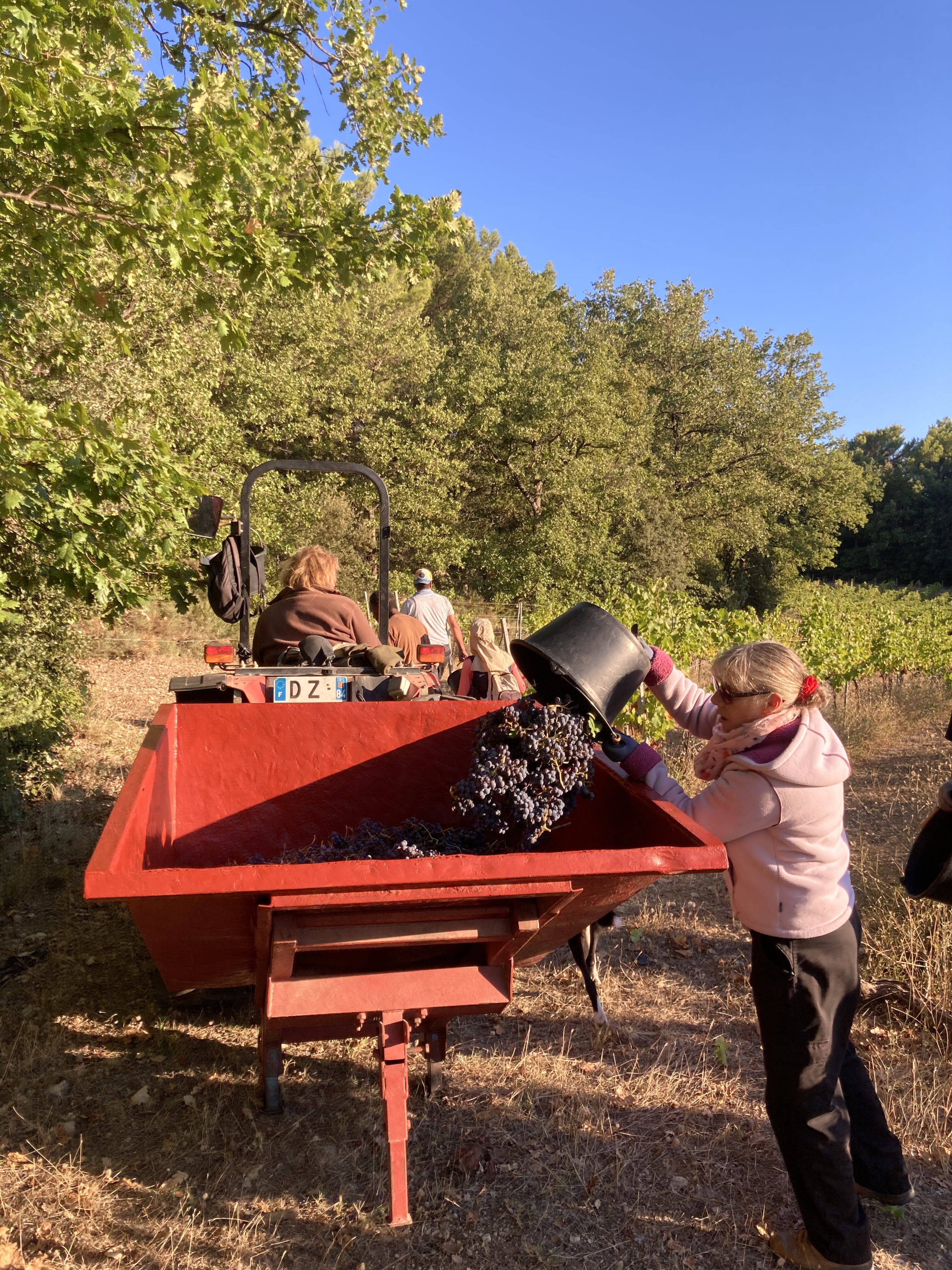
Dominique
Many people in the southern Rhone were picking by mid-August, and in mid-July in the Fitou appellation further south (near Perpignan). Is this the future – who would bet against it?
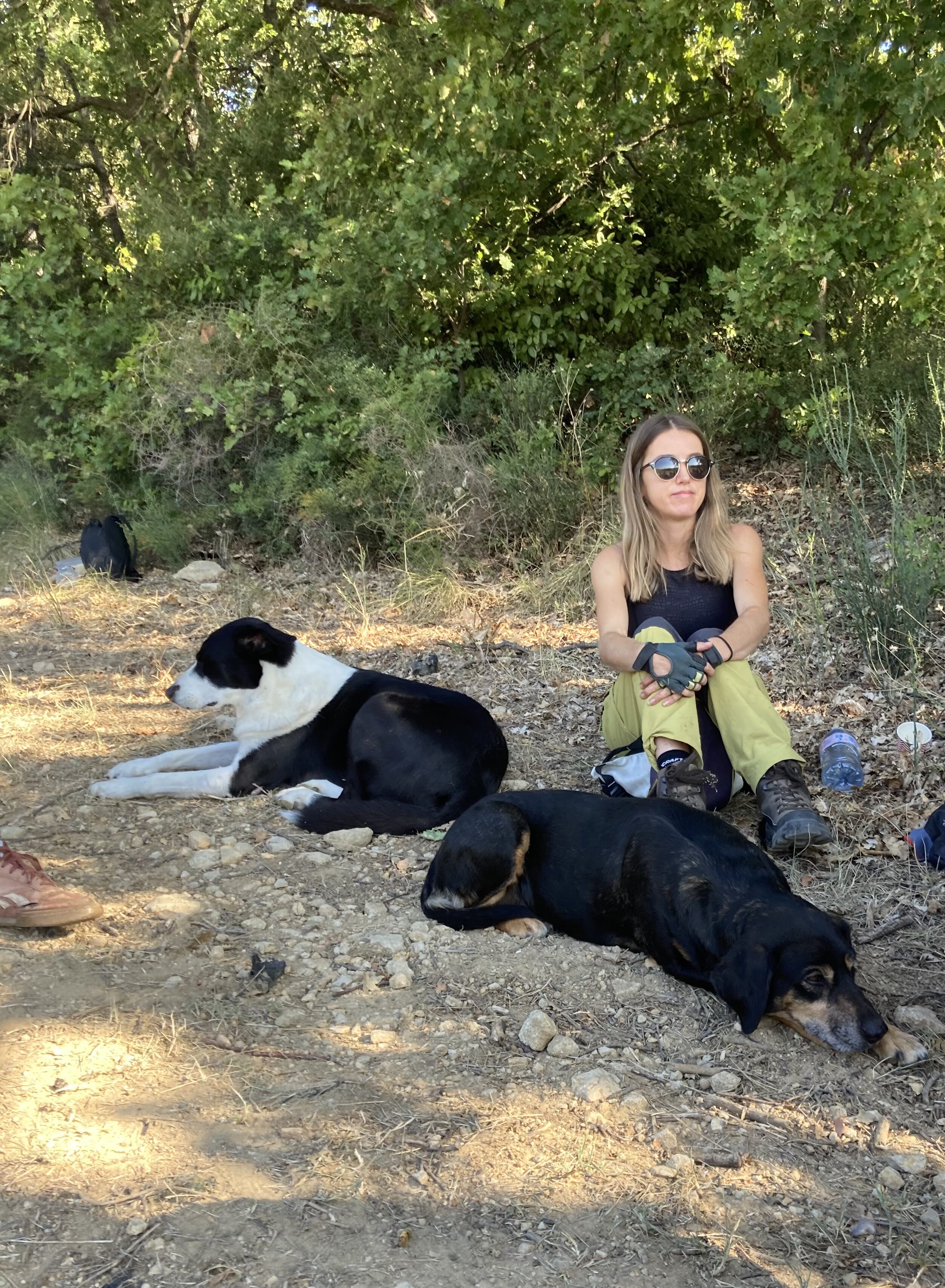
Sarah
The main take-home from this harvest was: the early start, bone-dry, warm weather and record low yields. Some parcels were less than half their average volumes. While the last of the sugars are still fermenting, we can see that the Grenache has kept its acidity despite the conditions, the Syrah feels richer. The whites have also maintained their freshness. With the climate on the move in such dynamic fashion, the vines are adapting (roots going deeper, less fruit per vine) and the humans are adapting (less working the ground, keeping maximum leaf coverage for shade, picking earlier) their actions too.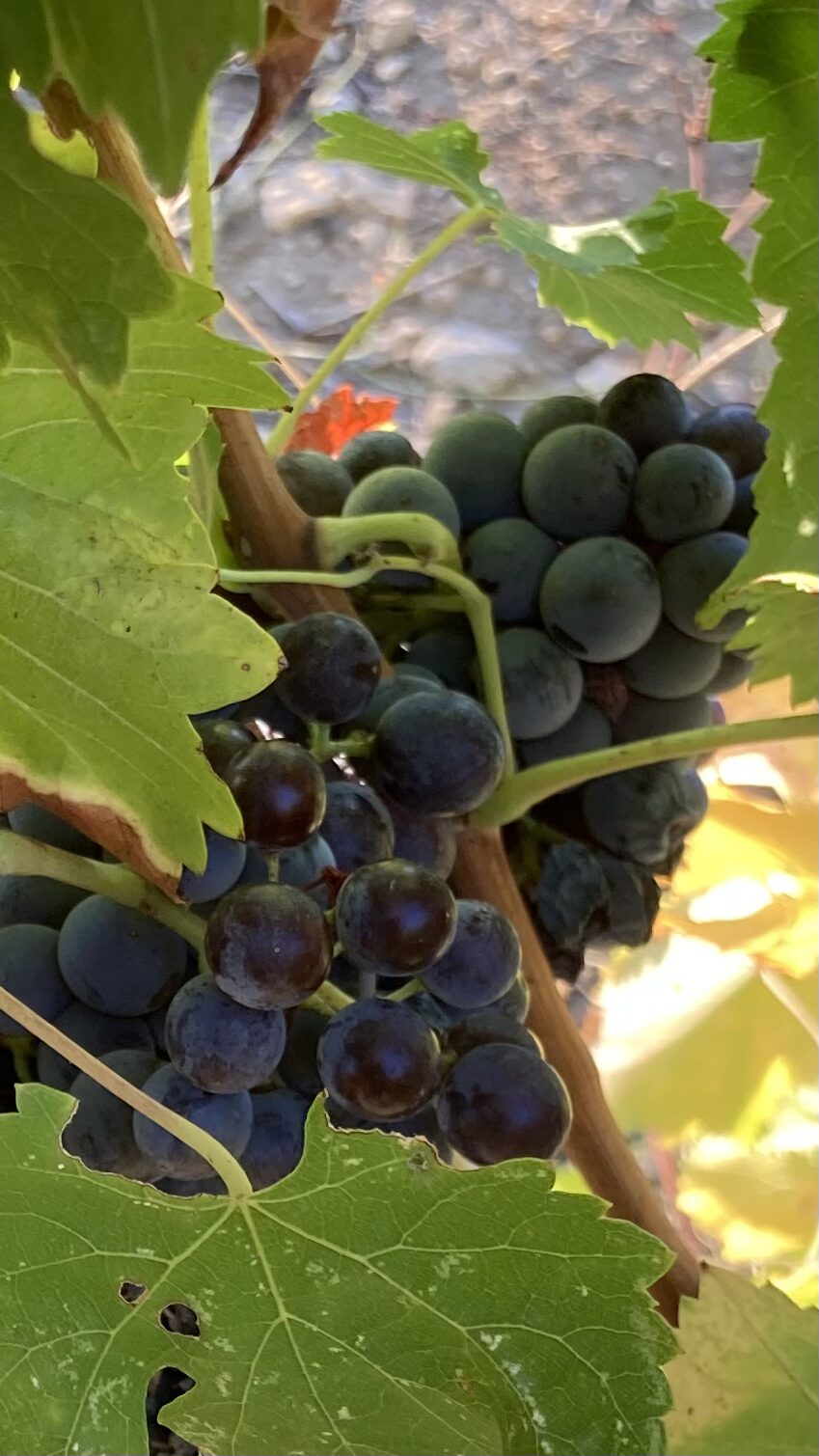
There was an emotional end to the harvest as Clémence, who has been with us for a decade, left Unang. She will be greatly missed. This coincided with Dominique, who has worked with us since 2003 (part-time for the past 10 years), retiring as well. Both gave a great deal of themselves to the domaine. So, we lost 35 years of experience in October. No pressure then on Sarah who comes in new to the team.
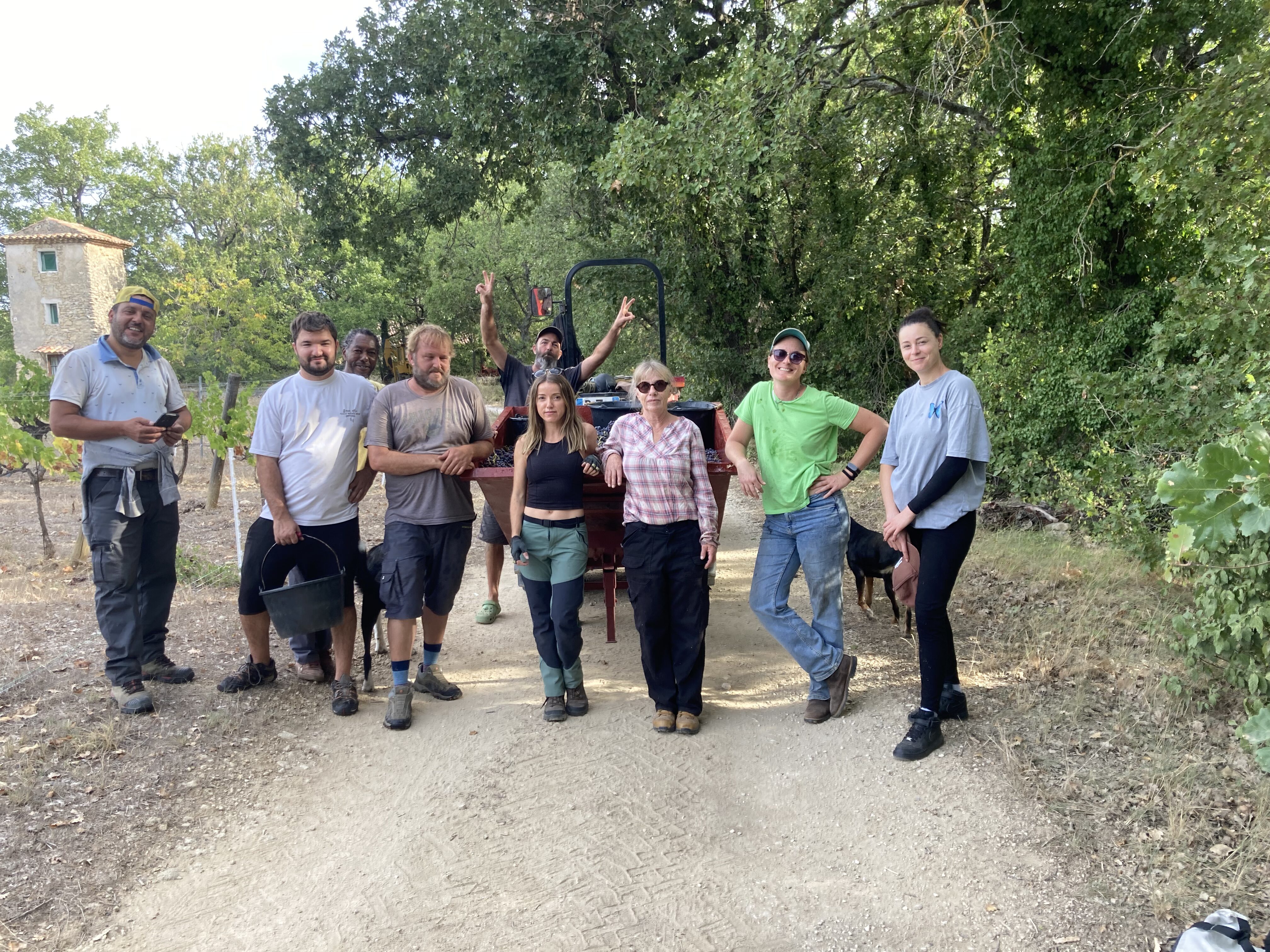
The best team – with Clemence in green – she will be sorely missed.
Lastly, a respected French wine guide Bettane+Desseauve named Ventoux their appellation of the year, dubbing it one of the most exciting wine territories. Nice to get the recognition, but if you are reading this then you are probably already convinced… Cheers!
JK 12.10.26
Speak Your Mind